Discover what to eat in Brooklyn through a neighborhood-by-neighborhood food journey. From classic New York pizza and Polish pierogis to Italian cannoli and artisanal chocolate, this guide explores the flavors, culture, and hidden context behind Brooklyn’s most iconic food experiences.
If you’re trying to figure out what to eat in Brooklyn, the challenge isn’t finding food — it’s knowing where to start.
Brooklyn isn’t one thing. It’s a collection of neighborhoods, each with its own culture, history, and food traditions. Within a relatively small area, you can move from Polish delis to Italian bakeries, from Middle Eastern street food to classic New York pizza, all shaped by the people who built these communities over generations. That’s what makes eating in Brooklyn so compelling, and also what makes it easy to miss the best parts if you’re exploring on your own.
This guide follows a path through Brooklyn the way a local experience unfolds — neighborhood by neighborhood, story by story, bite by bite.
Williamsburg: Old World Meets New Energy
In South Williamsburg, the pace shifts immediately. The neighborhood is home to one of the largest Hasidic communities in the world, where traditions have been preserved in a way that feels almost untouched by time. Walking through the area gives you a sense of continuity that’s rare in a city that changes so quickly.
Just a short distance away, North Williamsburg tells a completely different story. It’s one of the most dynamic areas in Brooklyn, filled with art, small businesses, and a constantly evolving food scene. The contrast between these two areas is part of what makes Brooklyn unique. You’re not just eating in different places, you’re moving through different worlds.
Greenpoint: Brooklyn’s Polish Roots
Greenpoint has long been a center of Polish culture in New York City, and that history is still very present in its food. The neighborhood offers a connection to traditions that have been carried forward for generations, without being reshaped to fit trends.
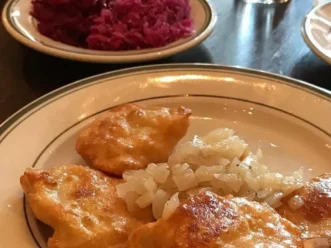
This is where you experience foods like grilled Polish kielbasa and handmade pierogis in their proper context. These dishes are not just menu items, they reflect the identity of the neighborhood and the people who have lived there for decades. There’s a sense of authenticity here that’s difficult to replicate elsewhere.
Classic New York Pizza, Done Right
No food guide to Brooklyn would be complete without pizza, but there’s a difference between grabbing a slice and experiencing it where it’s done right. A proper stop in Brooklyn brings you to coal-fired New York–style pizza, served simply and without distraction.
It’s one of those foods that feels familiar at first, but becomes something entirely different when you have it in the right place. The quality, the texture, and the history behind it all come together in a way that defines what people think of as true New York pizza.
Street Food and Unexpected Flavors
Brooklyn’s food scene extends well beyond any one tradition. As you move through different neighborhoods, you encounter flavors that reflect a wide range of cultural influences.
Middle Eastern street food offers bold, immediate flavor and a sense of spontaneity, while other stops may feel more casual but leave a lasting impression. These are the kinds of places that are easy to overlook if you don’t know they’re there. Without context, you might walk right past them. With the right perspective, they become highlights of the experience.
Carroll Gardens: Italian Brooklyn
Carroll Gardens carries the legacy of Italian-American Brooklyn, where food is closely tied to family, tradition, and community. The pace slows down here, and the experience becomes more rooted in long-standing local identity.
In this part of Brooklyn, bakeries and shops reflect decades of continuity. A classic cannoli is more than just dessert. It represents a connection to the neighborhood’s history and the people who built it. It’s simple, but it’s meaningful in a way that goes beyond the food itself.
DUMBO: Ending with a View
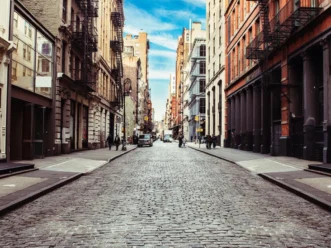
By the time you reach DUMBO, the atmosphere shifts again. Industrial buildings, converted lofts, and open waterfront views create a setting that feels modern while still connected to Brooklyn’s past.
Here, the experience becomes less about volume and more about perspective. Enjoying something like artisanal chocolate in this environment brings together taste and place in a way that feels distinctly New York. The skyline views provide a natural moment to pause and take it all in.
Food in Brooklyn Is Different
What makes Brooklyn stand out is not just the variety of food, but the way it is tied to immigration, neighborhood identity, and local history. Each stop reflects a different part of the city’s story.
You’re not simply trying different dishes. You’re moving through layers of culture that most visitors never fully experience on their own. That depth is what separates a casual visit from something more memorable.
It’s absolutely possible to explore Brooklyn on your own, but the difference comes down to context. Knowing where to go, what matters, and how each place fits into the larger picture changes the entire experience.
A guided food tour connects the food to the stories behind it. Instead of guessing, you move with intention. Instead of just eating, you understand what you’re tasting and why it matters. That added layer is what turns a series of stops into a cohesive experience.
Planning Your Brooklyn Food Experience
If you’re limited on time and want to experience multiple neighborhoods in a single afternoon, having a structured route makes a significant difference. Moving efficiently between locations allows you to see more without feeling rushed.
A well-designed half-day experience brings together different parts of Brooklyn, balances walking with time to explore, and includes a variety of tastings that add up to something substantial. It’s designed to give you a broad sense of the borough while still allowing you to slow down and take in each moment.